

From a Japanese film to PUBG: where battle royale came from
Where did battle royale games come from? Takami's novel, Fukasaku's film, Minecraft Hunger Games, PlayerUnknown's mods, PUBG, Fortnite and the lawsuit.
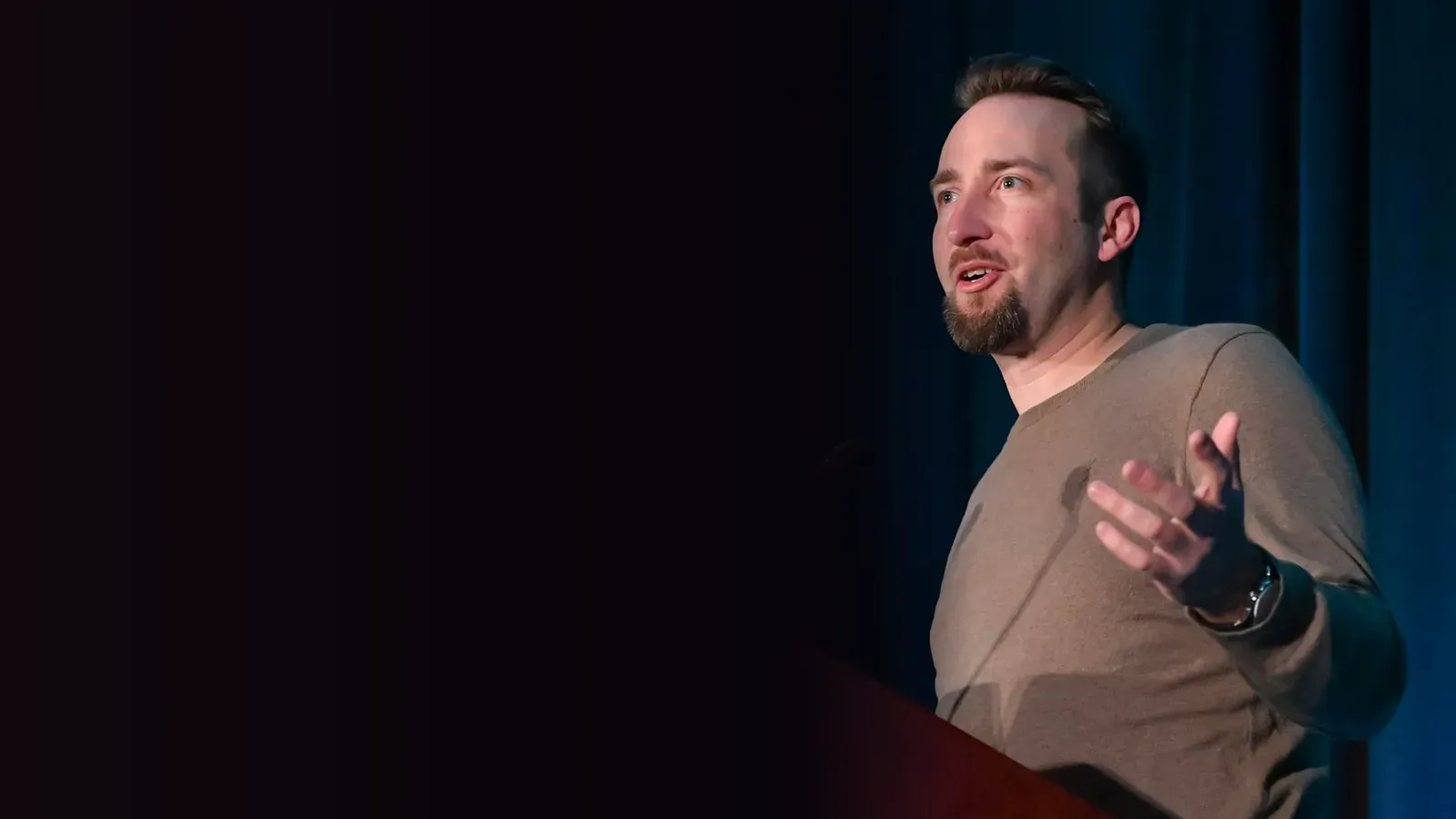
In 2013 Brendan Greene, an Irish modder who went by PlayerUnknown, put a new game mode online for the military shooter Arma 2. “When I first launched the DayZ battle-royale mod in Arma 2, I only had six servers,” he told New York magazine years later. “I had to restart them all and lock them all by hand, because there was no way to do that automatically.” He watched the text chat as players waited: “I’d see people saying, ‘I’ve been waiting two days to get into this.’”
Four years later his idea had a hundred players jumping out of a plane, and a few months after that a school bus. But Greene is the first to say the idea was never his.
A novel, then a film
The name comes from Japan. Koushun Takami finished his novel Battle Royale in 1996; it lost in the final round of a horror fiction prize in 1997 and came out in 1999. In the book, as VICE summarised it, “a fictional authoritarian government kidnaps high school students, drops them in a remote location, and forces them to fight each other to the death.” It went on to sell more than a million copies in Japan.
Kinji Fukasaku’s film followed on 16 December 2000. Japan’s ratings board gave it an R-15 rating, which kept out the very age group the film was about. “The R-15 decision by Eirin naturally was something I couldn’t accept,” Fukasaku told the film site Midnight Eye in 2001. “I did lodge a complaint and asked for a review.”
When The Hunger Games reached cinemas in 2012, plenty of viewers saw the same premise. Its author, Suzanne Collins, said she had not known Takami’s work until she finished her first draft.
Minecraft gets there first
Games picked the idea up soon after that film. In May 2012 a Yahoo tech blog reported “Hunger Games-style Minecraft servers are popping up all over”. PC Gamer later traced the line to a 2012 Minecraft plugin called Hunger Games, renamed Survival Games. The YouTube group Mindcrack ran its Ultra Hardcore deathmatches, and in DayZ, itself an Arma 2 mod, streamers fought in a tournament called Survivor GameZ.
Greene, who grew up on an army base in County Kildare, loved DayZ but could not enter Survivor GameZ because he was not a streamer. So, VICE wrote, “he vowed to create a version that was open to all.” He named his mod after the Japanese film and built it, by his own account, from code he “begged, borrowed, and stole.”
Circles, because squares were too hard
The first version looked a lot like The Hunger Games: players started together and grabbed loot from a pile of backpacks. When Greene moved the mod to Arma 3, he added the plane that scattered everyone across the map. The streamer Lirik picked it up. “Lirik was playing it for nearly a year on and off,” Greene said. “He was always like: ‘One more game, one more game’. I thought, okay, I have something here.”
The genre’s signature, the shrinking safe zone, came from a limitation. Greene wanted the shrinking squares he remembered from the film. “I couldn’t program squares like it is in the Battle Royale movie,” Greene told Rock Paper Shotgun in 2017. “The code for doing squares that shrink, I just couldn’t do it because I wasn’t a very good coder, right?” So he made a circle that kept getting smaller, “because that’s how I could do it.”
Sony Online Entertainment brought him in as a consultant for its zombie game H1Z1, where his mode became H1Z1: King of the Kill. Then the Korean company Bluehole offered him a game of his own. “PUBG was that sort of final realisation [of my vision], after three years of working and maybe thinking that I would never get a chance to make it,” he said.
A hundred players and a plane
PlayerUnknown’s Battlegrounds entered Steam Early Access on 23 March 2017. It dropped 100 players from a plane onto an island, and in its first three days, Eurogamer reported, it made over $11 million. Within six weeks it had sold 2 million copies. In December 2017 it passed three million players online at once on Steam, against a previous record of 1.3 million held by Dota 2. PC Gamer counted more than 40 million copies sold in its first year.
Greene was candid about where it came from. “Look, I don’t claim ownership,” he told Rock Paper Shotgun. “These are old ideas… It’s various versions on something that I guess I popularised, you know? The idea itself is not mine.”
The bus in the sky
Epic Games watched all this from California. Donald Mustard, who later ran Fortnite, described a car ride in mid-2017, with Tim Sweeney, then-president Paul Meegan and CTO Kim Libreri, on the way to a meeting at Disney. “We’re doing it, we’re going to re-task the team, we’re going to put it in Fortnite, we’re going to make a battle royale,” he recalled, in an interview reported by Kotaku in 2024. He needed a one-page design document in about three hours, and wrote it on the way. “A school bus is going by us in traffic, and I’m like: Players are going to be on a bus in the sky and we’re going to jump out of it.”
Fortnite Battle Royale went free for everyone on 26 September 2017. Bluehole objected at once. “We are concerned that ‘Fortnite’ may be replicating the experience for which ‘PUBG’ is known,” its vice president Chang Han Kim said. His problem, he told PC Gamer, was Epic in particular: “it’s not about the idea itself, it’s about Epic Games.” PUBG ran on Epic’s Unreal Engine, and “we pay a large amount of royalties,” Kim said. Both games announced 20 million players that November. Variety noted that it had taken PUBG eight months and Fortnite two.
In January 2018 PUBG Corp filed a copyright suit against Epic in the Seoul Central District Court. The case only became public in late May. A lawyer told Variety that in the United States you generally cannot protect an idea, a genre or a game mechanic. PUBG Corp dropped the suit in June 2018 without saying why. Mustard’s later view: “All video games are all of us just riffing off each other.”
Greene, asked about Fortnite on stage at GDC in March 2018, was generous: “It’s great that the battle royale space is expanding.”
Everyone in the circle
The genre kept growing. Respawn released Apex Legends on 4 February 2019, the same day it announced it, and Wikipedia records 25 million players by the end of its first week. Call of Duty: Warzone arrived free on 10 March 2020, and Activision said it had more than 50 million players a month later.
By then Greene had moved on. “I’ve done battle royale, it’s time to try something else,” he told GamesIndustry.biz in 2019. The genre he popularised still runs on rules he chose: a plane at the start, loot on the ground, and a circle that closes in because, in 2013, he couldn’t make squares shrink.
Sources
Checked .
- The Creator of 'PUBG' on Where Battle Royale Started and Where It's Going — VICE
- PlayerUnknown's Battlegrounds' Brendan Greene Interview — New York magazine (Intelligencer)
- PlayerUnknown's Battlegrounds interview: New modes, modding plans, and his meteoric rise — Rock Paper Shotgun
- Battlegrounds' PlayerUnknown and the future of Battle Royale — Eurogamer
- Midnight Eye interview: Kinji Fukasaku — Midnight Eye
- Battle Royale (novel) — Wikipedia
- How battle royale changed the last decade of games (and the next one) — PC Gamer
- Fortnite's Battle Royale Mode Was Designed During An Uber Ride — Kotaku
- PUBG exec clarifies objection to Fortnite Battle Royale: 'it's not about the idea itself, it's about Epic Games' — PC Gamer
- 'PUBG' vs. 'Fortnite' Feud Explainer — Variety
- PUBG Corp. Drops Lawsuit Against Fortnite — IGN
- Brendan Greene: "I'm done with battle royale" — GamesIndustry.biz
- Call of Duty: Warzone hits 50 million players in first month — Polygon
Image credits
- Brendan “PlayerUnknown” Greene speaking at a lectern at the Game Developers Conference, March 2018 — Game Developers Conference. CC BY 2.5. Placed on a widened dark background and converted to WebP
