

Why roguelikes are called roguelikes
Why is it called a roguelike? Rogue's Santa Cruz origins, the 1993 Usenet vote nobody loved, the Berlin Interpretation of 2008 and how rogue-lite arrived.
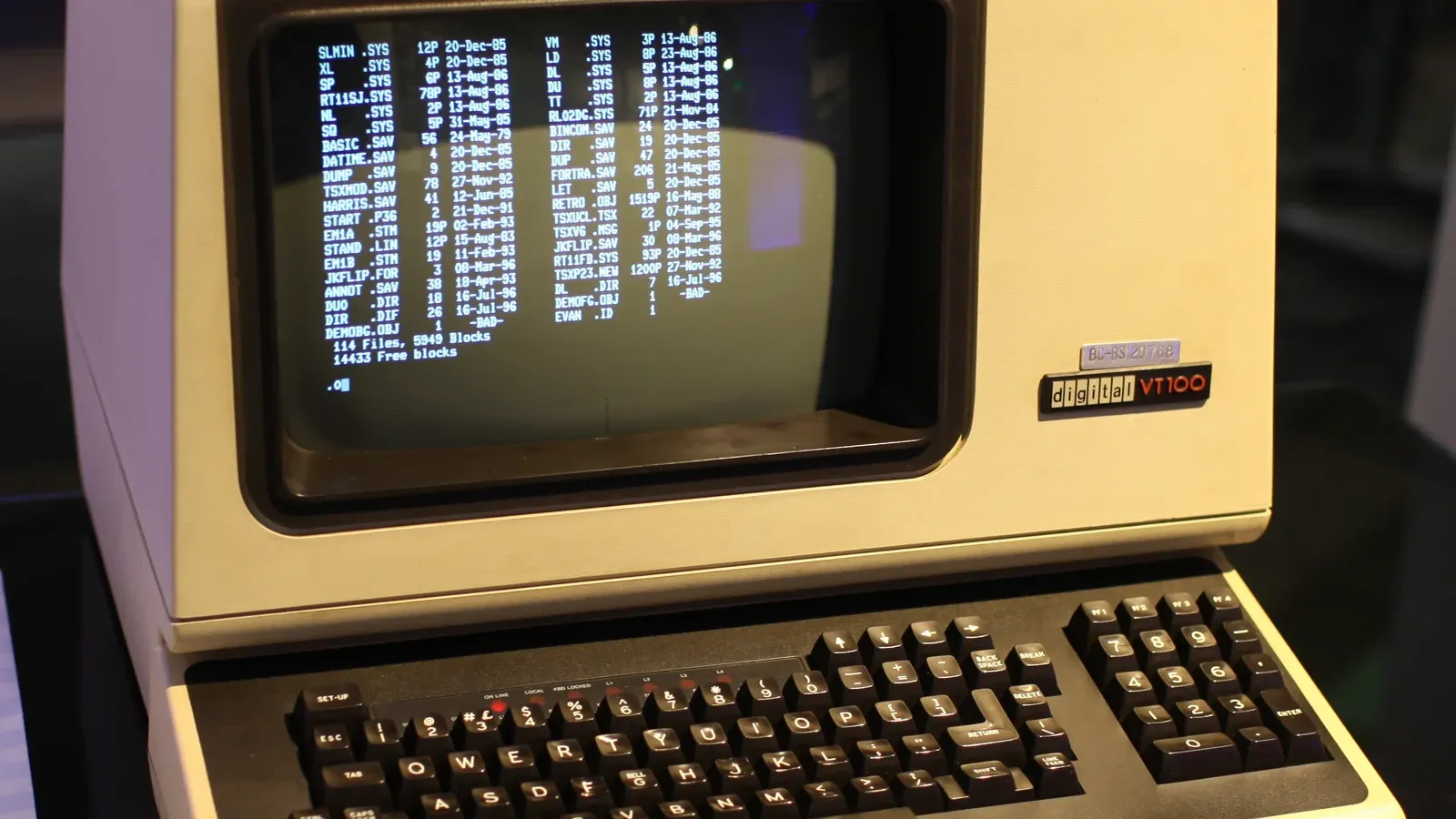
In July 1993 somebody on Usenet proposed a name for a family of dungeon games, and the replies were not kind. “PLEASE, there has got to be something better that [sic] roguelike,” wrote Robert A. Hayden. Chris Waters called the idea “obscure, overly limiting, poorly named, and generally abhorrent.” The name won anyway. More than thirty years later the word and its offspring cover everything from NetHack to Hades, and people still argue about what it means.
Two students and a library from Berkeley
The game it points to was made around 1980 by two students at the University of California, Santa Cruz, Michael Toy and Glenn Wichman. They had heard that a library from Berkeley called curses, written by Ken Arnold, could draw on a terminal screen, and that it might draw a dungeon. Wichman, the beginner at programming, says “I pretty much learned ‘C’ by looking over his shoulder as he wrote.”
The big idea came early. Instead of a fixed adventure, “the program itself should ‘build the dungeon’, giving you a new adventure every time you played,” Wichman wrote in his 1997 history of the game. The title was his too: “The name ‘Rogue’ was my idea.” Arnold’s part is easy to overlook, and Wichman knows the feeling: “To this day, there are a lot of folks who think of it as Michael & Ken’s game.”
Then Rogue spread. It shipped with BSD Unix from Berkeley, which landed it on university computers around the world, and Wichman says it became “the undisputed most popular game on college campuses” for about three years. Wikipedia quotes Unix co-creator Dennis Ritchie joking that it was “the biggest waste of CPU cycles in history.” Because Rogue’s source code was not released, others wrote their own versions from scratch: Hack, which became NetHack, and Moria.
A name chosen as the least bad option
By 1993 those games had fans scattered across Usenet groups. On 18 June, Aliza Panitz suggested collecting them under one heading, rec.games.dungeon. On 2 July Andrew Solovay posted the formal proposal and floated an alternative: “Perhaps, since ‘rogue’ is the granddaddy of these games, the hierarchy ought to be called ‘rec.games.roguelike’.”
That is when the objections poured in. Solovay’s third proposal, on 20 July, admitted that among those who agreed on a name at all, “roguelike” was the least of the evils. The vote closed on 18 August with 337 ballots: the umbrella groups rec.games.roguelike.announce and .misc passed, while separate groups for Moria, NetHack and Rogue failed and only passed in a second vote in May 1994. Santiago Zapata, who dug the threads out of the archives in 2017, notes the word may have been used before, but “it seems clear that it was nowhere near established until it happened.”
Nine people in Berlin
Fifteen years later the word had a definition problem. On 20 September 2008, nine developers met in Berlin for the first International Roguelike Development Conference, held at the bootlab space in the Kunsthaus Tacheles. Berlin had won the venue poll with nine votes, ahead of Atlanta with two; joke names for the event, such as AMPHORA, got none. One commenter on the report wrote: “I always imagined roguelikers getting together would be more like a knitting group than an academic conference.”
Out of that meeting came the Berlin Interpretation, posted by developer Jeff Lait that month. It opens: “‘Roguelike’ refers to a genre, not merely ‘like-Rogue’.” It lists high-value traits such as random levels, permadeath, turns and a grid, and names five games as the canon: ADOM, Angband, Crawl, NetHack and Rogue. The document says it is not meant to constrain developers, but later players often used it as a checklist anyway; our roguelike page covers that argument.
Lite, and a name that did not catch on
In 2013 a new kind of game borrowed the random levels and permadeath and dropped the rest. Cellar Door Games’ press sheet for Rogue Legacy, released on 27 June 2013, called it a “genealogical rogue-LITE”. The site Save or Quit later credited Rogue Legacy’s developers with coining “rogue-lite”, though nobody has ruled out an earlier use. Today the roguelite is a genre of its own.
Not everyone wanted to keep borrowing Rogue’s name. On 3 December 2013 developer Lars Doucet proposed “procedural death labyrinth”, inspired by designer Tanya X. Short’s advice: “Never Say Roguelike.” He began by admitting: “I usually shy away from vocabulary fights and let smarter people than me hash it out.” The new name did not stick.
The creator who found out late
Glenn Wichman learned that his game had become a genre later than you might think. “It was probably in the early 2000s that I first became aware of the Roguelike genre,” he told Gamereactor in 2020. Toy, Wichman and Arnold reunited on stage at the Roguelike Celebration in San Francisco in 2016. And one mystery stumps even Rogue’s co-creator: “I don’t know when the term perma-death got coined, or how it came about (I would love to find out).”
Sources
Checked .
- A Brief History of Rogue — Glenn R. Wichman
- 40 Years On: The Making of Rogue with Glenn Wichman — Gamereactor
- On the Historical Origin of the Roguelike term — Santiago Zapata (Internet Archive copy)
- Berlin Interpretation — RogueBasin
- IRDC 2008 — RogueBasin
- Berlin International Roguelike Development Conference 2008 — Temple of the Roguelike (Internet Archive copy)
- On Procedural Death Labyrinths — Fortress of Doors (Lars Doucet)
- A History of the words roguelike and rogue-lite — Save or Quit
- Rogue (video game) — Wikipedia
Image credits
- A DEC VT100 terminal with green-on-black text, connected to a PDP-11 at the Living Computer Museum — Jason Scott. CC BY 2.0. Cropped and converted to WebP
