

The Unity runtime fee: what happened, and who left
The Unity runtime fee explained: the per-install charge of September 2023, the developer revolt, the CEO's exit, the move to Godot, and the cancellation a year later.
On the afternoon of 12 September 2023, a few hours after Unity published a pricing update on its blog, Filip Coulianos of Keepsake Games posted a question: “So I can technically run my competitors into the ground by having a farm of machines installing and uninstalling their games in an endless cycle?” Within three days, as the Daily Dot put it, the engine maker had “completely torpedoed its reputation in the games industry.”
A fee for every install
Unity’s new Runtime Fee would start on 1 January 2024. On the free Personal plan, once a game passed $200,000 in revenue over the past year and 200,000 lifetime installs, the developer would pay $0.20 for every new install. Pro and Enterprise customers had higher thresholds, $1 million and a million installs. Unity’s reasoning: every download installs the Unity runtime, and a fee per install let creators keep the ongoing gains a revenue share would take. Asked by Axios, Unity first said a reinstall would count as a second install and a second charge.
Two days later Unity posted a clarification: reinstalls would not be charged after all, and fewer than 10% of its customers would be affected. That figure was Unity’s own, and developers disputed it.
The studios speak up
Mega Crit, the small team behind Slay the Spire, had never said a word in public. “We have never made a public statement before,” its post began on 14 September. Its statement called Unity’s change “a violation of trust.” Two years into making its next game in Unity, Mega Crit said it would migrate to another engine unless the changes were reversed. Massive Monster went further and said it would delete Cult of the Lamb on 1 January.
Garry Newman, founder of Facepunch Studios, gave the BBC an analogy: “That would be like Adobe charging all users of Photoshop per image view.” Forest Willard of Innersloth, the studio behind Among Us, came out of a call with Unity predicting concessions rather than a reversal. He compared Unity with Epic’s engine: “Unreal’s pricing isn’t fair. It’s just simpler.”
Sorry, and a smaller fee
On 22 September Marc Whitten, who ran Unity’s creation tools, published an open letter. It opened: “I want to start with this: I am sorry.” He added: “We should have spoken with more of you and we should have incorporated more of your feedback before announcing our new Runtime Fee policy.” The new terms were much narrower. Personal stayed free, with its revenue cap raised to $200,000. No fee would apply below $1 million in revenue, only games made with the next long-term-support version from 2024 on would count, and studios could pay either 2.5% of revenue or the per-install amount, whichever was lower.
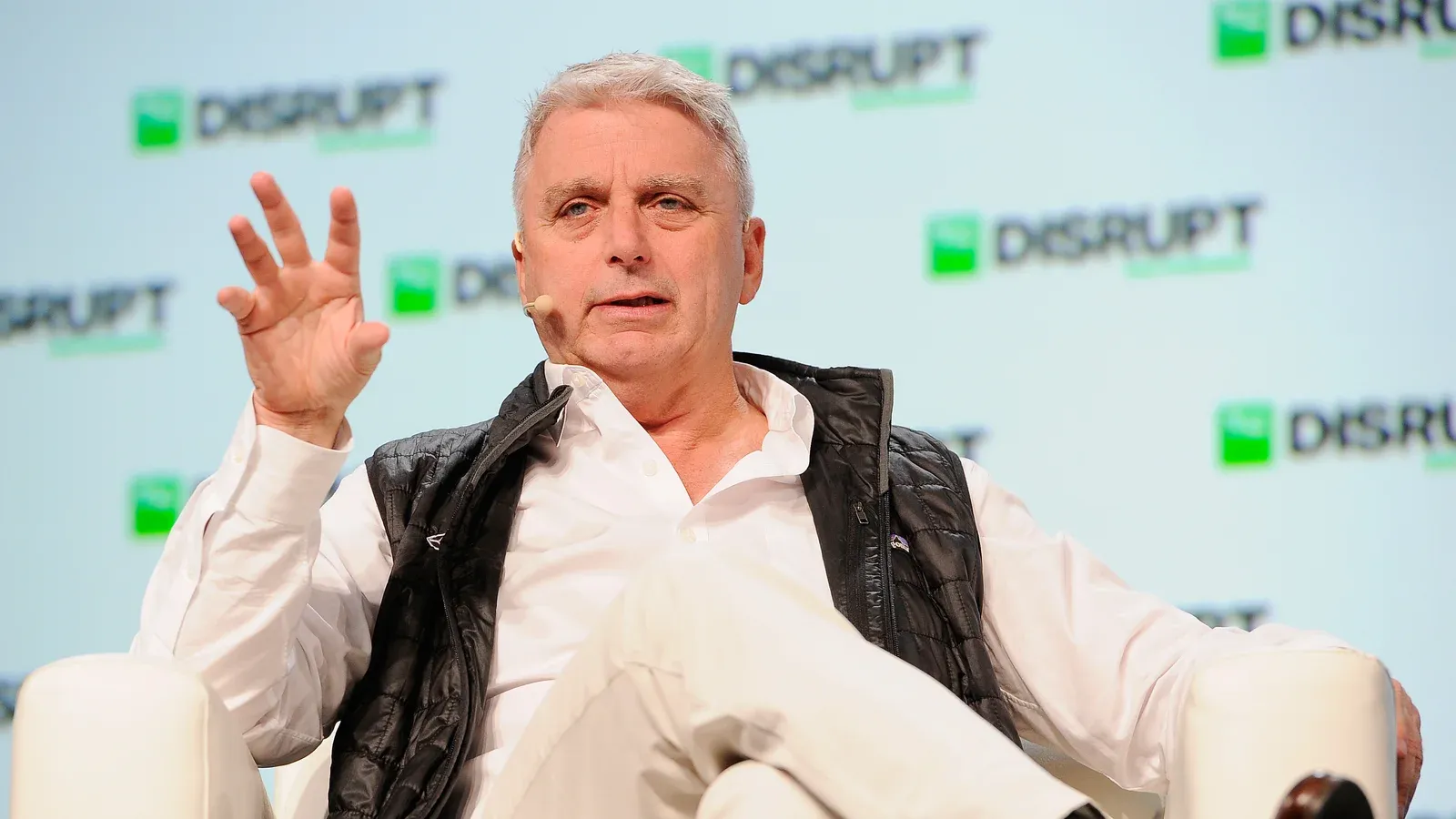
On 9 October Unity announced that John Riccitiello was retiring as chief executive, effective immediately, in a press release that went out late on a Monday afternoon that, as one report noted, many observe as a holiday. “It’s been a privilege to lead Unity for nearly a decade,” he said. Unity’s release did not mention the fee; the press connected the two by timing. Not everyone was won back. Brandon Sheffield of Necrosoft Games told Wired: “We simply don’t trust them to stick to their word.” In January 2024 Unity cut about 1,800 jobs, a quarter of its staff, describing it as part of a company reset.
Where some of them went
Godot, the free and open-source engine, happened to launch its Development Fund on the same day as Unity’s announcement. By the end of 2023 the fund brought in €54,754 a month, up from €25,591 at launch, and Terraria’s developer, Re-Logic, gave $100,000 in a single donation. “We reached our goal much faster than expected,” the Godot Foundation wrote. How much of that came from angry Unity users, Godot never claimed; by the end of 2024 monthly funding stood a little lower, at €49,678.
Mega Crit did leave. In April 2024 it revealed that Slay the Spire II runs on Godot.
One year to the day
On 12 September 2024, exactly a year after the announcement, Unity’s new chief executive, Matt Bromberg, cancelled the Runtime Fee for games, effective immediately. He wrote that “we can’t pursue that mission in conflict with our customers,” and that the relationship with developers “must be a partnership built on trust.” Unity went back to charging per seat, with Pro rising 8% to $2,200 per seat from January 2025.
A month later Unity 6 shipped, with no Runtime Fee attached. By then Mega Crit’s next game was already being built on Godot.
Sources
Checked .
- Unity plan pricing and packaging updates — Unity (Internet Archive copy)
- Unity seeks to clarify Runtime Fee after days of 'confusion and frustration' — Game Developer
- Slay The Spire devs say Unity 'f****d up' in first-ever statement — PCGamesN
- Unity engine maker says sorry after runtime fee price plan backlash — BBC Newsbeat
- Among Us dev predicts install fee concessions instead of reversal after call with Unity — Game Developer
- An open letter to our community — Unity
- Unity Announces Leadership Transition — Business Wire
- Godot Foundation Update 2023 — Godot Engine
- A message to our community: Unity is canceling the Runtime Fee — Unity
- Unity has eliminated its controversial runtime fee — The Verge
Image credits
- John Riccitiello, then CEO of Unity Technologies, speaking on stage at TechCrunch Disrupt San Francisco, September 2018 — TechCrunch. CC BY 2.0. Cropped and converted to WebP
